Blog Archives
Sample: Chapter 1
Below, you’ll find Chapter 1 of The Cerberus Rebellion. I hope you enjoy!
Chapter 1 – Eadric
The day was cool and dry but a stiff wind heralded a storm. Cold; the kind that would ride over the northern mountains from the tundra beyond and blanket the city of Aetheston in snow.
His Grace Eadric Garrard, King of Ansgar and Duke of Elsdon, was deep in thought as he read a large, leather bound book. He was taller than most, and broader too, with a full head of chestnut hair and vivid green eyes. He wore loose green trousers and a white cotton shirt, buttoned three-quarters of the way to his throat.
The wind howled outside the thick window.
The study was small, meant only for the king and a single guest. A long desk cut the room in two; on one side, the King’s massive leather chair, a smaller on the other. Book-lined shelves were built into two of the thick black stone walls from floor to low ceiling and a pair of lanterns flanked the oak door on the third wall. Behind the King, a stained-glass window stood in for the fourth wall. The room was near the top of Old Keep and faced north; sunlight filled the room from sunrise to sunset.
The tome was the abbreviated history of every king of Ansgar.
Robert the Unifier, the Thirty-Fourth King of Ansgar, ascended to the throne one thousand, one hundred and fifty-nine years after the founding of Aetheston, at the age of thirty-four years, Eadric read. The book had been printed, not handwritten, so it was easier to read than most of the ancient tomes in his study. Robert was so named after he married Helena of Agilard, the first daughter of the first Duke of Agilard, the Last King of Kerberos having died thirteen years earlier. Robert dedicated his reign to bringing peace and stability to the conquered lands of Kerberos. Robert fathered three sons and two daughters that survived to adulthood, including Charles, his heir.
The study door groaned open and Eadric looked up. It was his steward; the only person allowed to enter without permission. The man’s leather shoes scuffed at the stone floor as he shuffled across the room toward the King’s table. The man was short, stout and bald. He wore a simple green robe and carried a silver carafe, a cup, a dome covered plate and a folded newspaper on a tray. He set the tray on the desk and lifted the dome. Steam rose from the plate beneath; the bacon still crackled, there was some sizzle left to the small strips of steak, and scrambled eggs covered the rest of the plate. Eadric looked the tray over.
“Has it been tasted?” he asked. He saw the chunk of steak that had been cut at one end of the thick strip, and a piece of bacon half as long as the others.
“Yes, My King,” the steward confirmed.
“You may go,” Eadric said curtly. The steward nodded and turned.
Eadric waited for the door to close behind the man, then sighed. He pulled open the small drawer at the top of his desk, reached inside, and retrieved a small round tin.
He twisted the lid off the tin with practiced ease and sniffed at the black and red powder within. Satisfied that it had not been tampered with, Eadric took a heavy pinch and sprinkled the powder across the plate, careful to get every part of the meal but waste none. Another heavy pinch went into the carafe of coffee.
Eadric spent a small fortune every year to keep himself supplied with Dragonsalt. The powder was ground from the seeds of the Dragonleaf plant, which only grew in high mountain caves and passes. Each flower only produced enough seed for a pinch of salt and each plant only flowered twice a year. By itself, the powder had a bitter taste to it, but when it was mixed with anything else it had no taste at all. It had taken years of practice and experience to find the right amount: too much and his stomach burned for days, too little and it would have no effect on the poisons that it was meant to counter.
He didn’t know if he’d ever been saved by the salt, but he wasn’t about to go without it. Every meal that the King ate was prepared and escorted to him under the watchful eyes of his guards, but even with all of those precautions, Eadric knew that poisons could make their way into his meals.
Eadric poured himself a cup of coffee. The cup was made from the talon of a particularly large griffin; another method of warding off poisons. He sipped the coffee then lifted a piece of bacon and took a furtive bite; it was still floppy, the way that he liked it. The Dragonsalt had dissolved enough that all he tasted was the grease and black pepper seasoning and pork. He nodded in satisfaction to no one in particular and unfolded the newspaper.
A fist banged on the door.
“Enter,” Eadric called, his voice thick with irritation.
The door swung open again and his captain of guards stepped through it. Kendall Shield was a broad shouldered man with a strong jaw, cold gray eyes and coal black hair. He wore a green, double-breasted frock-coat with a double row of golden buttons down the front and green trousers. Over his heart was the sigil of House Garrard: a golden man with a spear in hand, set on a white and green checked field. Above it was a smaller symbol: a plain brown shield with a golden crown in the center.
Eadric could see the handle and pommel of Kendall’s greatsword Guardian over his shoulder. Kendall was the perfect fit for the gargantuan weapon: he stood more than seven feet tall. The blade was hereditary, as was the title of Lord of Shields and Protector of the King.
The Shield clan had once been called something else, but whatever that name had been, it had been lost to history twelve hundred years earlier when they had sworn themselves and their descendants to the protection of the King of Ansgar. From the twelve men that had sworn their service, a clan had emerged that now included more than twelve hundred men-at-arms. And chief among them was Kendall Shield. He was called Lord, but he held no lands; only the right to be the personal guard to the king.
A much smaller man stepped through the door behind Kendall. He was olive skinned and of average height, his brown hair damp with sweat from climbing the winding tower steps. He wore a blue sack suit with the symbol of the nation of Welos sewn over his heart. He kept his green eyes focused at Eadric’s feet. A mere messenger.
Eadric stood to greet his visitor.
“Your Grace.” Kendall went to one knee; the man behind him followed suit.
“Rise,” Eadric instructed.
“Your Grace, I bring a request from Lord Wyne,” the messenger announced.
“Considering your attire, I wouldn’t have expected it to be from anyone else,” Eadric said and snorted.
The messenger frowned. “Your Grace?”
“Never mind.” The King shook his head. Messengers, after all, were not the smartest. “Well, out with it.”
“Yes, Your Grace.” The messenger’s eyes returned to the floor. “Lord Wyne and Lord Biton Savakis wish to have a private audience with you.”
Eadric’s eyes narrowed. While it was not uncommon for the ambassadors from other lands to request audiences with him, they usually did so while he held court, or through one of his council members.
“It’s still early,” Eadric pointed out with a glance at his pocket watch. “I will see them after I break my fast. I will send someone to get them.”
“Your Grace, his Lordship—”
“His Lordship,” Eadric interrupted, “is an ambassador. A visitor in my land. I will see them when it is convenient to me. You are dismissed.”
“Yes, Your Grace.” The messenger bowed and backed out of the study; Kendall stayed.
“Have my steward prepare my parlor for visitors,” Eadric said.
Kendall nodded and withdrew.
Eadric drained his cup with a single drink, picked up the newspaper, folded it and turned for the door. Kendall waited outside with his arms folded. A guard stood on either side of the door; they stiffened when the King stepped through the doorway.
Both guards wore green frock-coats with a single row of buttons down the center, green trousers, and, unlike their commander, carried rifled muskets and had holstered revolvers on their right hips. The weapons rested on the stone floor and the guards held them near the end of the barrels.
At the end of the hall, a young squire shot upright and hurried to the King’s side. He was small even for twelve, with short black hair and green eyes. The boy was the son of one of Eadric’s more important lesser lords, though the King always had trouble remembering which.
“I need to prepare for my visitors,” Eadric announced.
“Yes, Your Grace.” Kendall nodded. Landon and Radnor shouldered their rifled muskets and the five of them started down the passage.
The Old Keep was a tall, round structure with wide stairs along the inside of the thick walls. Kendall led the way down the winding stairwell. Eadric was a handful of steps behind him with his squire on his heels, Landon and Radnor another few steps further still behind. Servants and pages pressed themselves against the wall of the stairwell as the King passed, their heads bowed to their sovereign as he made his way toward the bottom of the tower.
Kendall stopped and held up his hand. The screeching laughter of a child washed over the party as Crown Prince Tyler barreled up the steps, his sister Kara close on his heels. Behind the girl were the children’s guards. The four men breathed heavily as they worked to keep up with the children.
The boy was near his eighth year and was already the spitting image of his father: the same brown hair, green eyes and square jaw as his sire, and he was nearly as tall as his sister. She was eleven, with their mother’s chestnut hair and blue eyes.
“Your Grace.” Sir Vance Shield led the guards assigned to the Crown Prince.
He was Kendall’s half brother. The former Lord Protector had remarried after his first wife had passed away in childbirth. Where the first Lady Shield had been a woman of Kerberos, tall and broad of shoulders, the second was a native of Ansgar’s central region. Tonya Shield was barely five feet tall, with auburn hair and green eyes.
Vance had inherited his mother’s hair and was nowhere near as tall as his older half-brother. He barely surpassed six feet. He had the same coal gray eyes, though, and his arms were as broad as a smaller man’s legs. An Elvish broadsword hung from his left hip in an ornate scabbard. Not as impressive as Guardian but a symbol of his status nonetheless.
The other guards carried rifled muskets. They all had the same plain look as most of the Shield clan: they were shorter than Kendall with dark hair and dark eyes.
Eadric inclined his head in greeting.
“Papa,” Tyler said as he wrapped his arms around his father’s leg.
“What is it, son?” Eadric asked as he mussed his son’s hair.
“Kara said that if I close my eyes at night, a manticore will come in and eat me!” The boy shot his sister an accusing look; she smiled sweetly at her father. “Tell her the manticores are all gone! That’s what Altavius said.”
“Altavius is right,” Eadric confirmed. “All of the manticores have gone from this world.”
“Are there any great creatures left, Father?” Kara asked.
“Griffins still live, far to the west along the sea cliffs. The dragons are all gone, though.”
“See, I told you there were still griffins!” Kara laughed at her brother. “Altavius told us of a noble who rides the griffins. He says that the noble has magics!”
Eadric frowned. “I would take what Altavius says about magic with some caution, child. He is prone to overstate things.”
“Yes, Father.”
“Run along now,” Eadric instructed. “Papa has work to do.”
The children gave him quick hugs, then continued their screaming run up the tower steps. Their guards tried to keep up.
At the base of the Old Keep, outside of the King’s Chambers, two men stood guard that Eadric had never seen before. They wore the uniforms of his guard, and even had the look of first branch Shields. They were tall and massive, with dark hair and wide brown eyes, but he didn’t know them and didn’t know that Kendall had made a change in his protection.
The men inclined their heads as the king strode by them wordlessly into his chambers. His squire and Kendall followed him.
Eadric didn’t have to ask if the men were trained. Kendall wouldn’t bring anyone into consideration for the King’s protection if he wasn’t sure of their abilities. Nonetheless, Eadric was hesitant. He disliked change in the group assigned to protect him. The men that served him were a critical part of Eadric’s day-to-day existence, a part on which he relied heavily. If he didn’t feel comfortable with those who protected him, how would he feel safe?
“Dalton, get me a wool shirt and trousers. It’s cool today,” Eadric instructed his squire. The boy nodded and hurried to the King’s clothing room. When the squire was out of earshot, Eadric said, “Sir Randall and Sir Vincent have been on my guard since my father passed away. And they were on his guard before that.”
“Sir Randall and Sir Vincent are getting old. I wanted to replace them with younger, more capable men.” Kendall stood at parade rest, his hands clasped in front of him. “They are the twin sons of Sir Leopold.”
At nearly five years younger than Eadric, the King had watched Kendall grow up. Eadric had known that the man would become his Lord Protector from the day he knew what a Lord Protector was. He had treated Kendall with more respect than he treated anyone outside his own family.
“What would you have them reassigned to?”
“They have been assigned to protect your lady sister, Katherine.”
The lesser branches and older of the first branch of the King’s Shields were generally assigned to protect those lower in the line of succession to the throne. While Katherine had once been the eldest child of King Charles, she was now further in line of succession, after Eadric’s son and daughter and his nephews.
“Very well.”
***
Sometime later, Eadric finished the last of another glass of whiskey. A half melted ice cube was left alone in the small glass. Even during the winter, ice was an expensive rarity shipped down from the north in massive chunks, but if anyone in Ansgar could afford the luxury of a cool drink, it was the king.
He nodded to his steward, tucked neatly into a corner away from the King and his guests. The man disappeared through the huge door and closed it behind him. Eadric had taken off his tailcoat, though he still wore his crown on his brown hair. The white wool shirt that Eadric wore was large, even for his well muscled body, and green wool trousers were cut loose enough to provide plenty of circulation.
Eadric had decided to meet with his current guests in his parlor, a small room far from the noise and activity of the throne room or the council chambers, because all of the rooms beneath the castle had been built with the magic of ancient Elvish wizards. The Elves had cast powerful incantations on the thick black stones so that they were always temperate to the touch. Tiny gemstone flecks in the stones sparkled in the lantern light.
Eadric stood at the only real table in the room, pushed against the back wall of the parlor. A grand map of the world was laid across the massive surface, each nation intricately drawn and painted on what Eadric supposed was an old leather hide. A box of markers was tucked beneath the table, used when troop movements and activities were discussed. Those markers were worn down from their once grand carving, the black stone smoothed from more than a thousand years of handling by kings, generals and advisors beyond Eadric’s count.
The nation of Ansgar occupied the entire southern half of the continent and stretched more than fourteen thousand miles from Agilard in the east to the West Shore at the other end of the continent. In the west, the territories loyal to him reached from the Griffin Coast on the northern shore, nearly four thousand miles to Sea Watch Castle as it faced the south on the Vast Sea. His nation was the most narrow at the Tirrell Barony, only a few hundred miles from the coast to the nation’s border with Franta. Ansgar was home to more than seventy-five million citizens, and Eadric was their king.
The parlor had once been a dark, empty place. When he had been crowned, Eadric had ordered tapestries hung to celebrate his family’s many accomplishments in the twelve hundred years that they had ruled Ansgar. One of the massive hangings depicted his great-grandfather’s victory over the Last King of Kerberos, the banner of his house raised above the red three-headed hellhound against black of Agilard. Another tapestry was a scene from much further back in the history of Ansgar: the first landing of settlers after the long and perilous journey from Welos.
Kendall stood in a small alcove near the door. His arms were crossed and his eyes watched the king’s guests with a flicker of suspicion in his eyes. He did not concern himself with matters of foreign relations, but the law stated that when the King received guests, the Lord Protector was to be present. He wore a gun-belt with a pair of revolvers holstered on his thighs; their grips were made of ivory and their barrels were iron.
Four over-sized dark red leather chairs were arranged in a rough circle in the center of the small room to allow for conversation. Each had a small, dark wood table beside it to hold drinks or a small plate. The floor was bare stone.
Each of the two guests occupied one of the large chairs. Both held a glass similar to Eadric’s, though they remained on their first while Eadric was on his third. They had brought him heavy news and a grand request, but seemed to be at peace with the words that they carried.
Lord Thomas Wyne, ambassador to the nation of Welos, sat nearest the door. He was much smaller than Eadric, with short brown hair well salted with gray and dull brown eyes. He had the look of a career diplomat, one who had spent his life working outside his own nation with those whom his king needed a trusted advisor near. He wore a white collared shirt, blue wool trousers and a blue tailcoat with two rows of golden buttons.
Unlike most ambassadors, he wore only the signet ring that came with his office and a thin chain that hung loosely around his neck. He was a quiet man that chose his words carefully. He was more than twice Eadric’s age; sixty-five if Eadric’s memory served him.
Lord Biton Savakis, ambassador to Istivan, was as close to opposite of Wyne as could be. He was a huge man, one of the largest Istivani that Eadric had ever seen, with arms like trees. His skin was a medium olive, his hair dark and his green eyes sharp. He wore a brown leather vest and brown wool trousers. His massive arms were heavily tattooed. Eadric could see the tattoos that marked him as a husband and father, a warrior that had spilled the blood of an enemy, and one that Eadric thought meant that the man had stood as a judge before the King of Istivan.
He was as loud and boisterous as Thomas was quiet and reserved. Nearing forty, he was only a few years older than Eadric, but he had garnered enough power in his homeland to earn his role as ambassador to Ansgar.
The two ambassadors had insisted that they meet in private, and at their request Eadric had left his closest advisors in the antechamber. Now he wished that his advisors had heard everything the two ambassadors had said. And what they had asked for.
“You realize what you’re asking for?” These were Eadric’s first words since his second glass of whiskey.
Thomas spoke first, as was his place as the senior ambassador. “We do realize that it would require a great investment on your part, and on the part of your people.” His baritone voice was thick with the drawl of his homeland.
“We would not have come to you if we did not need your help, Your Grace.” Biton was uncharacteristically soft. His accent was stronger, the sounds bunched closely together. “But the situation is dire.”
“Indeed it is,” Eadric said as he slipped his left hand into his pocket. He found the smooth stone there and rubbed it between his thumb and forefinger. The stone had been in his family for centuries; it was a rare gem from across the Vast Sea that had been given to one of his predecessors as a good luck charm. “If what you say is true, and I have no reason to doubt it, then I’m astounded that King Mercer has been so short sighted that he has refused to join with you.”
“King Mercer is supremely confident in the strength of his army and the walls of his fortresses. We have offered him our help, before this storm descends upon him. He has been warned that once he is embroiled in conflict, we will not lend our aid to him. Maybe once the famed Citadel falls, he will consider his mistakes.”
“Why let him fall? If he is invaded and you add your armies to his, there is no way the Citadel will fall.”
“To teach him a lesson about pride.” Biton shrugged. “And once he falls, his lands are subject to whoever is strong enough to take them.”
“And the Citadel is a massive fortress. If Mercer can hold The Pinch with just his forces, all the better for us to not have to throw our armies into the fray. And if he falls, he will take enough of his enemy with him that we’ll have much less trouble cleaning up the mess. If you join with us,” Thomas added.
“I’d like to bring my council in on this before I decide.” Eadric paused when his steward opened the door a crack and slid back into the parlor with a bottle of whiskey and a glass of ice on a tray. He took Eadric’s empty glass and slid back out into the hall. Eadric quietly sprinkled a pinch of Dragonsalt into the bottle and poured some over the ice.
“Of course, Your Grace. It is a massive undertaking that we’ve asked of you.” Thomas stood and Biton followed his lead. “How long do you think that you would need to join us, should you decide that you wish to take that course?”
“It will take some time to get my nobles and their levies assembled, and I’ll have to find the vessels to carry them across the Straits of Steimor.” Eadric took a long drink from his glass. “I would say a year is a safe estimate, though it will likely be longer than that.”
“Very good, Your Grace. We will await your word.”
The two ambassadors bowed and Eadric nodded a dismissal.
Eadric set his glass down on the star that marked Aetheston’s location on Zaria’s northern continent. More than thirteen thousand miles separated Ansgar from the Istivani capital of Kirton, if one sailed through the Strait of Steimor and marched overland; another eight thousand overland laid between Kirton and the Ehtroyan fortress known as The Citadel. Even by rail it would take his armies nearly a month to reach the Istivani capital.
The option of sailing his armies to Ehtroy was an alternative, although that too would take almost a month of sailing, and finding the ships to carry almost two hundred thousand soldiers would be nearly impossible.
“Your Grace.” Eadric’s steward had entered, as silent as a whisper. “Would you like me to summon your council?”
“Yes, please do, Charles.”
Studying the lands he ruled, Eadric took note of the various sigils that marked the holdings of his many lords; the shields that marked the holdings of his dukes were the largest. The sigil of House Jarmann at Agilard, the only duchy east of Aetheston; the black Pegasus against white of House Chalmer in the West Valley, the castle nestled into the Spine Mountains against the border with Beldane; the blue hydra against orange of House Seward at Sea Watch, on the southwestern coast of Ansgar; the red centaur on a blue field of House Ridley in White Ridge, nestled between the Vast Sea on its south side and the three peaks of the White Ridge on its north. The golden hammer on gray of House Croutcher was last; despite its grand size, in the far western corner of the nation the Arndell Duchy was sparsely populated.
Smaller shields marked the eleven earls of Ansgar, two east of Aetheston and nine to the west. Shields smaller still marked the forty-two baronies that divided the rest of the nation. He was not as familiar with the baronies as he was with the earldoms and duchies, but then he rarely had the occasion to deal with many of them.
He had, of course, met every one of his sworn nobles at his coronation, or their ascension, but the lesser nobles had smaller estates to care for and could scarcely afford frequent journeys to the capital to pay homage to their king.
Eadric was still focused on the map when the door groaned open and his council entered.
“Your Grace.” Lord Alden Hanley, Earl of Hamilton, was a tall, slender man who leaned heavily on an ebony cane as he walked. Gray colored his brown hair and full beard, but his brown eyes were still sharp and careful. He wore a white shirt, brown trousers and a blue tailcoat with the symbol of his house sewn over his heart.
Before Eadric’s ascension to the throne of Ansgar, Alden had betrothed his oldest daughter to the Crown Prince. The move had established the earl as a close advisor to the new king when Eadric had come to power and the King gave extra weight to his opinion.
“Lord Hanley.” Eadric clasped the man’s hands and inclined his head to his father by law.
“Your Grace, you are looking well today,” Lord William Richards said as he bowed.
Baron Saxan had long been one of Eadric’s closest advisors. He had been brought to court at the age of five by his father to learn the ways of the capital and the court of the nation’s ruler.
William and Eadric had been tutored by the same teachers, taught of swords by the same master at arms, and had ascended to their titles at nearly the same time. Eadric had raised him to Lord Councilor as one of his first acts.
He stood nearly the same height as Eadric, with a similarly athletic build. He was shaved bald, the thin mustache and well-kept red beard the only hint of his hair color. He wore a pair of simple glasses over his crystal blue eyes and blue tailcoat with a double row of golden buttons.
“Thank you, William.” Eadric presented his signet ring for his friend to kiss.
“My King, I see that the sums you have been spending on Dragonsalt have not been in vain,” Lord Peter Wellstone said with a smile. As the Chancellor of Ansgar it was his responsibility to keep the kingdom’s books and accounts.
He was the youngest man in the room, only just into his twenty-fifth year, and wore the black tailcoat and trousers of the style popular with the Court as of late. He had been an apprentice to the last Chancellor, his childless uncle the previous Earl Colby, and had taken to his studies with fervor.
He carried a stack of ledgers with him, books filled with figures on the kingdom’s incomes, expenses and coffers. He was a small man, not very assuming at first glance, with well-combed black hair. His blue eyes glanced back and forth every so often as if of their own volition.
“A pinch before bed helps me sleep,” Eadric lied.
“Your Grace,” said a lilting, sweet voice.
Altavius Dohr’s accent was less pronounced than it had once been, or so Eadric was told, but it still marked him as one not native to Ansgar’s common tongue.
The Elf was the oldest member of Eadric’s council. He was, in fact, the oldest person on this side of the world, at least as far as anyone knew. He had traveled across the Vast Sea twelve hundred years earlier with the first colonists to leave Welos.
Altavius had served as advisor to every king since Liam the First King. Hundreds of years ago, one of Eadric’s ancestors had tried to grant him a small estate on the ocean shore in the Elsdon Duchy, but the Elf was a High Priest in some Elvish order, and they were not allowed to hold lands.
Altavius’ eyes had once been a deep sapphire; they were now a pale blue. His once brilliant red hair was now silver and white and was tucked behind his long, tapered ears. Once he stood over a foot taller than anyone in the room; now he was hunched with age and leaned heavily on his staff.
The apple sized emerald held in the staff’s heavy iron setting pulsed gently. He wore the brilliant green robes of an Elfish priest. Half a dozen heavy amulets hung on golden chains and jeweled rings sat on each finger.
Eadric’s four advisors sat in the leather chairs. Each took a moment to adjust to the thick cushions in their own fashion. Lord Wellstone rested his stack of ledgers on the small table beside him. Altavius leaned his staff against the chair’s arm. Lord Hanley hooked his cane on the back of the chair, and Lord Richards pushed back into his chair and stretched his legs out before him.
“Would you care for refreshments, my lords?” Eadric’s steward asked with a low bow.
“A flagon of chilled wine,” Eadric said before any of his council members could make a request.
“Yes, Your Grace.” The steward bowed again and disappeared through the door.
The nobles made small talk with their king while they waited for the steward to return. He was only a few minutes in retrieving the chilled flagon, four silver cups and one griffin talon horn. He poured each a cup and retreated against the wall.
Eadric set his cup untouched on one of the side tables.
“My Lords, I suppose you are all wondering why the ambassadors from Welos and Istivan requested a meeting with me,” Eadric began. Altavius nodded; William grunted. “They bring grave tidings from across the Vast Sea,” he continued, “and a request of our people.”
Altavius’ eyes glittered and William sat up in his chair.
“Emperor Frederick Maximilian of Chesia has invaded the nations of Jarin and Malkala, and he has been amassing forces to push into Andivar or Garton.” Eadric shook his head. “The other nations are becoming worried. Andivar has mustered its armies, which should dissuade the Emperor, at least for a time.”
“The Emperor would be a fool to invade the Andivari,” Altavius agreed. He was the only one of them that had ever seen the other side of the world, even if it had been twelve hundred years prior. “The Andivari armies are the best trained and best armed on the other side of the Vast Sea. The lack of prospects to his south will more likely push the Emperor east.”
“That is what many others have decided as well,” Eadric confirmed. “But if Chesia invades northeast, into Garton, there is only one goal which they would have in mind.”
“Ehtroy and the Pinch,” William said. “But the Pinch is flanked along its coast by massive mountain ranges, and the pass through them is protected by two massive fortresses at the west end and the Citadel to the east.”
“No armies have breached the Citadel, nor made their way past it, ever. But it has been hundreds of years since the last attempted attack, and gunpowder weapons have come a long way since then.” Eadric picked up his wine and took a sip. “The rulers of Istivan and Welos do not seem to hold to that opinion of the Citadel’s defenses.”
“Istivan and Welos have never been terribly friendly,” Altavius pointed out. “More than a few wars have been fought between the two, and much of the southeastern Welosi territories fell under Istivani control three centuries ago. If those two have come together, the threat is indeed perilous.”
“Eighty days ago, Grand Duke Acantha, his ambassador to Ehtroy and the ambassador from Welos had a meeting with King Mercer. In it, they detailed their plans for the defense of the Pinch, using the combined armies of Ehtroy, Welos and Istivan. King Mercer has decided that Emperor Maximilian is not a threat to his people, and that he does not require the aid of his eastern neighbors. And he will not let them pass the Citadel, lest the Emperor hold him and his people responsible for it.”
“He has refused to allow them passage?” William shook his head.
“And they have told him that when the Emperor does invade, they will lend him no aid,” Eadric added.
“Damnable fools,” Alden swore. Then his eyes narrowed in realization. “Sharing that information was not the point of their meeting. We could have read it in the papers, or heard from our own ambassadors across the Vast Sea.”
“You are correct.” Eadric nodded and took a drink. “The Grand Duke of Istivan and the King of Welos have asked that we call our levies to arms, sail them across the Straits of Steimor and march them overland to join with their armies in preparation for the invasion by Chesia. Their message comes with the endorsement of the Triumvirate of Lot’Mai-ron and the Sea King of Laine.” Altavius took in a great gasp of air. His eyes widened and his knuckles whitened, so firm was his grip on the arms of the chair.
“Those endorsements do not come lightly,” Altavius said after a moment. “No one has ever received the endorsements of both the Elvish realms.”
The two nations of Elves held wildly different opinions of the men that they shared this world with. The Sea Nation of Laine was a great naval power with swift warships and deep hulled merchant ships. They took part in the wars of men more often than their southern kin would have approved.
Lot’Mai-Ron’s three-headed council held its nation out of the struggles of men. They provided wisdom and knowledge to those who asked it of them, but nothing more. And they rarely agreed with their estranged relations.
“Your Grace, it is a great undertaking to call up all your nobles and their armies,” Alden noted as he rubbed his chin. “I don’t believe that we will need the whole of our levies. One hundred and sixty thousand soldiers will be difficult to camp, difficult to feed, and very difficult to move to the front.”
“If we’re going to throw our lot in with Istivan and Welos, we need to make sure that we are not wasting whatever we send across the sea. Those men are going to have to return and till our fields. We need to send an overwhelming force,” Lord Richards pointed out, as if everyone in the room didn’t already know that.
“I think we should reconsider this course of action,” Alden said, the hesitation in his voice evident. Even his closest advisors rarely dared to oppose the king when his mind was set on something. “There is no benefit to sending our armies across the sea for a war that may never happen.”
“Even if the war does not develop, the goodwill that we will gain with Welos and Istivan will more than account for sending our troops to their aid.”
“Your Grace, we already have strong trade and diplomatic ties with King Caerwyn and Grand Duke Acantha,” Alden said. “What more can they provide us that they do not already?”
“If the Chesians are content with the conquest of Jarin and Malkala, the goodwill with Welos and Istivan will do nothing. If, however, the Emperor invades Ehtroy and is repelled by Caerwyn and Acantha, they will control the Pinch and many of the harbors that our merchants frequent.”
“Your Grace, even if the benefits of aligning ourselves with this coalition have great potential, it is not Welos or Istivan that will bear the burden of sending our armies across the sea,” Alden said. “When the time comes to pay our soldiers, the gold and silver will come from our coffers.”
Peter spoke for the first time since the council had entered the small chambers. “The coffers could handle all the expenses of the sailing the army across the Straits. And feeding them while they are on the boats and in Welos or wherever they end up. But it would be up to the Lords to pay the wages for their soldiers, and feed them and march them to the nearest ports.”
Peter’s ledgers were always impossibly accurate, so if he said that the royal coffers could withstand a cost, then it was true. Eadric had audited the accounts, more than once, and every time the numbers had come up correct. He wondered, as he watched the man flip through the pages of one thick leather tome, how it was that someone so honest had come to become a master of accounts. And what the man was hiding behind his obvious facade.
“I would want them to gather here before they make the journey across the Straits,” Eadric said after a moment. “And the year has been plentiful. Our granaries were overfull and many of my nobles sold their spare grain to merchants. Their coffers wouldn’t suffer too greatly from the cost.”
“I think we should offer to pay a portion of the soldiers’ salaries,” Altavius suggested. “It will take some burden off the nobles. We could raise some form of tax to cover it if we need to.”
“The coffers could sustain the cost of the basics of transport, but—”
“The coffers will recover,” Eadric interrupted. “We’ll cover the first year of the soldiers’ pay once they reach Istivan. After that, the nobles will be responsible for paying their troops.”
“Yes, Your Grace.” Peter nodded and jotted this down in one of his ledgers.
“Very well.” Eadric stood. His closest advisors followed suit. “Lord Hanley, send out the riders to the nearby nobles and dispatch a messenger train to the West. I want the letters to be sealed until they are delivered. Instruct the nobles to call their levies to arms. Tell them to meet with their dukes while they are waiting for their soldiers to gather. I want all of the planning and organization set before they march. Charles, please get word to the High Priest. I would have his blessings.”
Altavius winced at the reference to the High Priest of Elsdon. The Elven priests did not get along well with the priests of the various gods that were worshiped in the lands of men. The High Priest of Elsdon led the largest temple in Ansgar, dedicated to Tyro, the Ansgari God of Justice. The Elsdon sigil had been taken from the symbol of the faith of Tyro: a giant with a spear in hand.
“William, if you would stay a moment longer?”
“Of course, Your Grace.”
“You are dismissed, gentlemen,” Eadric said.
“Yes, Your Grace.” Alden Hanley and his colleagues bowed, and the three advisors excused themselves from the chamber.
Eadric stepped back to the table he had been studying before his advisors had joined him.
He had heard reports from his spy masters that the nobles of Western Ansgar had grown increasingly bold in their expression of discontent with his rule. Most were wise enough to have kept their feelings to themselves, or to express them only in private council. A handful, however, had railed against his policies in public meetings. Their representatives in the castle had downplayed their lords’ indiscretions; one had claimed that his lord was one of Eadric’s staunchest supporters among the nobles in the West.
This would be an opportunity to send some of those malcontents away to see what it was like away from their warm castles and servants. It would do them well to get their hands dirty.
Sending his armies across that sea was a risky maneuver. If he were attacked by any of his neighbors while his armies were away, it could take months to get his armies back.
But it wasn’t his neighbors that he was worried about, and he was afraid to admit that to his advisors.
“Your Grace?” William asked.
“William, I’d like you to meet with the Welosi and Istivani ambassadors and inform them of our decision,” Eadric said.
“Of course, Eadric,” William said with a nod.
“I want our levies to be recognized as a force to be reckoned with,” Eadric said. “I will not have the other nations laugh at us behind our backs—or worse, think us weak because some western contingent can’t keep themselves straight.”
“Our armies will have months to train before they cross the Straits,” William said.
“I want you to lead our armies,” Eadric said after a pause. “You’re my right-hand man. If there is anyone who knows what I want accomplished, it is you.”
“I’m honored, Your Grace,” William said. “But who will remain here to advise you?”
“That is no issue; I have more advisors than I can count. What I need is someone that I trust leading my armies when they are tens of thousands of miles away. We grew up together, we learned from the same teachers; there is no one better qualified.”
“There are plenty of generals with more experience than me,” William pointed out.
“Your battlefield experience is the least of my concerns,” Eadric said. He placed a hand on William’s shoulder. “I need someone that I trust intimately and I need someone that my nobles will accept as my surrogate on the other side of the world.”
“Let me think about it,” William said. He stood.
“There is one more thing,” Eadric said. “I’m concerned about the nobles in Kerberos.”
“Your Grace?”
“I have heard whispers that they are making plans to reassert their independence. If we are going to move our troops across the Straits of Steimor, they will have to march through Kerberos. Should Duke Jarmann truly have plans to revolt against my rule, I think that it is likely he will take advantage of this situation and may attack our armies while they are surrounded by his own.”
The nobles that once called themselves the nation of Kerberos had never been fully trusted in the halls of Aetheston and Founder’s Castle. They had fallen under the control of Ansgar after William the Defender had repulsed their invasion and countered with his own. When Sigurd Jarmann had knelt before William, he had pledged that his lands and those of his nobles would forever swear allegiance to the crown of Ansgar.
Eadric doubted their resolve. He had no firm proof of their plotting, but he had heard whispers from his lesser advisors that those nobles were planning something, something that would put them back in control of their own lands. Alone they were not a threat, but their long-standing relationships with the neighboring nations, nations that shared a common ancestry, were a danger.
They were not of the same blood as the people of Ansgar, who had come across the Vast Sea more than twelve centuries ago. If the Lords of Kerberos were able to convince King Penn of Steimor or Herzog Renwyk of Beldane to join their cause, they could field an army larger than any that Eadric could hope to muster.
The soldiers that would sail across the sea would include the levies sworn by Kerberos and, if after the armies returned to their lands the Lords of Kerberos decided to press their independence, Eadric would have a favor owed by the Kings of Welos and Istivan that would give him additional forces.
“Magnus is your family,” William reminded his liege. “He married your sister; their children are your blood.”
“My sister was never a strong soul,” Eadric said. “That’s why I forced her out of the regency when I was sixteen. Her children will be worse. My nephew Roland has only been to Aetheston twice in his life, and I’ve never even seen the other two. They have spent their entire lives with the Kerberosi, reading their accounts of history, listening to them complain about how we’ve had our boots on their necks for a century.”
“I doubt that Magnus will be foolish enough to mount a rebellion when we have our levies assembled and trained,” William said. “He is a bold man, but he is not stupid.”
“I want you to draw up plans to deal with the Kerberosi. If Magnus decides to take advantage of our current situation, I want him crushed.”
The Cerberus is Loose!
Now available on Amazon! (Click the cover for a direct link!)
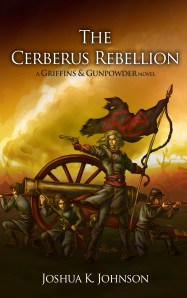
One hundred years of peace and prosperity. War changes everything.
On the world of Zaria, Elves, magic and mythical beasts coexist beside rifles and railroads. The futures of two nations hang in the balance as rebels and revolutionaries trade gunfire with loyalists and tyrants.
Eadric Garrard was raised to believe that as the rightful King of Ansgar, his loyal nobles and fearful subjects answered to his every whim, no matter the cost or consequence. His decision to send his troops thousands of miles away will test that fear, and loyalty.
Raedan Clyve was ordinary until an Elven ritual involving a griffin’s heart turned him into something more. Twenty years later, he still struggles with the magics that rage through his body. His mentor holds him back from his full potential and he faces pressure to find a suitable wife and father an heir.
Hadrian Clyve has picked up where his father left off and works to expand his family’s influence amongst the Ansgari nobility. His aggressive negotiation of alliances and shrewd choice of marriage agreements has earned him respect, and resentment. When his King calls his troops to arms, Hadrian has other things in mind.
After a century of scheming and decades of preparation, Magnus Jarmann is ready to bring his family’s plans to fruition by launching a war of independence that will free his people and return his country to its rightful place among the nations of Zaria. The King’s call to arms creates an opportunity that Magnus cannot afford to miss.
In a war, little is held back; in a revolution, nothing is safe.
Giveaway!
To celebrate the upcoming release of The Cerberus Rebellion, I’ve decided that I’m going to do a giveaway!
Here are the what and how:
What: Depending on the number of participants, I’ll be giving away some of my short stories (you can find the descriptions on the Products page).
For up to 7 participants, I’ll give a random winner their choice of short story! For 7-14participants, I’ll give the Grand Prize winner a copy of The Chesian Wars (not yet listed, this includes the 3 short stories and an additional prelude short story) and 1 other winner their choice of short story. For 15+, I’ll give away 1 copy of The Chesian Wars and 3 short story winners.
I can do these in .mobi, .epub or .pdf format, as requested by the winner.
How: all you have to do is leave a comment below. Each comment will be assigned a number and next Sunday I’ll randomly select numbers for each winner!
So leave a comment and pass the word along. The more entries, the more winners!
Poll!
As I mentioned in a previous post, I’ve decided to add Orcs to the world of Zaria. I’m going to have two different groups present: the first is going to be the citizens of a group of city-states (as mentioned in the above linked post).
These city-states are famous for their powerful trade barons and for the dozens of mercenary groups that call the cities home. The second half of the Orcish people will be modeled after Native Americans, particularly t he Iroquois. They’re going to live in the vast plains, farm and hunt.
I have all of that well established. Where the question arises, is that I need to decide on a mount that the Orcs favor. I was considering the stereotypical large-wolf mount, but then I thought about where I’m going to have these people live. It’s very similar to the Great Plains of America: grasslands and flat areas.
A herbivore would be better suited to the rigors of travel across the plains. So here’s my question: go with the traditional large wolf/warg, European Bison (buffalo) or something else. It has to be large enough to support a race that ranges from 6’8″ to 7’6″ and several hundred pounds. If you choose other, please leave a comment!
Finger on the Trigger
I got Cerberus back from the editor and he approved of the changes that I made to improve the flow and cut down on the clutter. All I have left to do is review the 2nd pass of edits, send it back for formatting and then it’s ready to go to Amazon.
Having just released the three accompanying short stories (you can check them out at the Products page) the initial nervousness of releasing isn’t as prevalent. I am slightly nervous in that once Cerberus is released, I’m going to go into full time promo-mode. For the short stories, I’ve limited myself to a twitter blast here and there and a couple of facebook posts. Other than that, I’ve let them sit. And it shows: their ranking is abysmal.
They were never meant to be leaders, and they didn’t cost much to produce, so if they do pick up sales off of Cerberus’ coattails, all the better.
Additionally, 10 other Authors and I recently launched the Guild of Dreams. It’s a joint-blog where we’ll be posting on themes (sometimes) and generally doing cross-promotions.
You can click the link to take a look and follow our twitter hashtag #guildofdreams.
Humble Beginnings
I think I’ve mentioned it before, but with my first set of Griffins & Gunpowder short stories getting ready to launch and The Cerberus Rebellion so close to publication, I thought I would revisit the flash in the pan that started it all.
This short piece of fiction was written on my phone, though I couldn’t pinpoint exactly when. It was probably during a slow point at work when I had the chance to type it out in Google Docs.
It was done in April of 2011 and for about 4 months, it just stewed. Finally, in August the story took off. So, without further ado, here is the short story that was titled “Griffin Steampunk”.
The hunting party rode slowly along the low rolling hills, buffered from the wind and light drizzle by their thick, fur lined cloaks. They had been riding in the fields and hills for the entire day and had yet to see any of the prey that they sought.
There was sign everywhere along the low hills that there were Griffins in this part of the country, but neither the party scouts nor their hunting hawks had come up with anything.
“My Lord,” one of the riders shouted from the hilltop. “Griffins, about three lengths ahead. A whole flight of them!”
“Lead the way, Alvars!” Lord Thomas Collins, Baron of Shadow Ridge, shouted to his armsman.
The hunting party turned, their large horses climbing the hill with little effort, following the scout. Armor clattered as the riders picked up speed, their cloaks flapped behind them as they road hard toward the flight of griffins that they had been tracking.
As the party neared, they slowed to a trot. Griffins were notorious for having impeccable hearing and for maintaining a keen watch when they were away from their avaries.
“Armsman, bring me a rifle!” Thomas shouted to the back of the party. While swords were the primary weapon on the planet Gregorov, rifles were the hunting weapon of choice. One of Lord Collins’ armsman dismounted and pulled the long gun from its holster at the horse’s side.
“My Lord,” the armsman handed his lord the weapon as Thomas dismounted from his horse.
“Thank you, Vance,” the baron said as he flipped open the caps on the scope.
The rifle, a meter long, weighed at least ten kilograms and was of the finest make on the planet. Thomas had used the rifle since his tenth birthday, though he had to use a mount until he could carry the weapon himself. Now, he hefted the barrel with no trouble and brought the stock to his shoulder.
The scope was high powered, it brought the beasts so close that Thomas could seen the individual feathers on each of the beasts. The male Griffins were covered in spikes, the females were smooth backed. Males were much larger than their mates, but were less valuable as trophies because of the ungainly spikes.
Thomas settled on one of the females, stalking along the side of the hill with her ears pinned back against her skull. Thomas held his breath and settled his sights on the beasts’ chest and flicked off the weapon’s safety. He braced himself against the ground and squeezed the trigger.
The rail gun thumped as it spit the the bolt of metal at supersonic velocities. It took mere seconds for the round to reach its target and Thomas could hear the screams of the other Griffins as they lifted into the air. The hunting party lowered themselves as much as possible: a flight of angry Griffins was nothing to be trifled with. The beasts circled for a few minutes before they finally drifted toward the cliffs, retreating to their avary.
“Let’s go see what we’ve got!” Thomas shouted as he handed the rifle back to his armsman. The party remounted and took off at a gallop towards where the Griffins had been.
The party had stopped at nearly a full length from the flight of Griffins, so even at a full gallop it took almost ten minutes for them to reach the corpse of the majestic beast that had been their target. The scouts arrived first, their smaller horses were faster than those of the armsmen and nobles, and they circled the corpse slowly. Even as he approached, Thomas could tell that the scouts were talking to each other about something.
As he approached, Thomas quickly realized what had the attention of the scouts. The corpse of the female Griffin had fallen where the beast had stood, but there was something else. Laying in a small stone circle were a trio of baby Griffins. Their wings were still tucked back against their bodies, a sure sign that they were not yet able to fly.
“What should we do with them, My Lord?” One of the armsmen asked.
“Griffins are dangerous animals, My Lord,” Thomas’ master-of-arms suggested. “We should put them down.”
“My lord,” Thomas’ advisor interrupted. “Griffins could be a great asset. When fully grown, they could support riders. And even if we can’t ever train them, their wings could be clipped like a trophy hawk and they could be prize animals. Imagine walking into the King’s Palace with a trio of Griffins at your heels. Everyone would respect your power and wealth.”
“Alexander,” Thomas looked to his oldest son, and most accomplished horse trainer. “Do you think that you could train these beasts to carry a rider?”
“If there is a beast that cannot be trained to take a rider, I have not come across it yet,” Alexander nodded. “They won’t be of size to take a rider for at least nine months, and in that time we could train them to be hunters.”
“Very well,” Thomas nodded. “We’ll take them back to the castle.”
And from that, the Griffins & Gunpowder universe was born. It just goes to show how far a story can wander before it finds its home in your head. Have you ever written down a quick idea and had it morph into something very different before you finally started writing it in detail?
A Character’s Death (Excerpt)
This is an excerpt from a future novel in the Griffins & Gunpowder universe. It wandered into my head tonight and I just had to get it written.
Flares continued to explode overhead, flashing white against the black of night. Fires burned in every corner of the fort, the result of powder magazines struck by explosive rounds or incendiary shells gone awry. Spouts of fire and smoke erupted from cannons and muskets all around him.
The smell of blood and burnt flesh was thick in [Name Redacted]’s nostrils. The air was hot, despite the late hour, and heavy with salt from the sea. Acrid gray smoke hung in rolling clouds and stung his nose; black pillars rose from the fires.
He could taste blood as well, from where the rifle butt had split his lip. The dry, bitter taste of gunpowder and the sweet salt of his own sweat were on the tip of his tongue.
Through the ringing, he heard the crackle of musket fire, the booming rhythm of artillery batteries lobbing rounds across the battlefield, the screams of the dying and shouted commands on all sides.
And as he stared down the barrel of the smoothbore cannon, his men skidding to a halt behind him, [Name Redacted] felt nothing.
The ten pound cannon had been rolled down from its place on a small ramp and turned inward, toward the attackers that had breached the clay walls. The gun sergeant stared at him with cold green eyes, lanyard pulled taught and gripped in a gloved hand. The gun’s officer was shouting commands, but not even his crew could hear him through the roar of battle.
[Name Redacted]’s heart beat twice, and then the sergeant yanked on the lanyard
What do you think?
That One Day…(Creativity, Brainstorming)
…When ideas flow like water.
Yesterday, I woke up and started getting ready for work. I started the Keurig machine (best.investment.ever), went downstairs to feed the cat and went back up to start the second half of my travel mug of coffee.
As I was standing there, my brain starting working on why I should introduce Orcs to my world (inspired by Satis’ comment of having a purpose for having a race present).
So my mind wandered a little bit down that track and Bam! an idea for another series set in my Griffins & Gunpowder universe (that would make 3). I liked the idea so I opened up my Evernote app and tapped out a few quick details and started off to work.
It’s about a ten minute drive to work and I wasn’t even halfway there when another G&G series idea slammed me. And then another. And then a third.
I was incredibly excited! I just had four new series ideas come out of nowhere, essentially tripling the number of series I could work with in my universe.
As soon as I got to work, I fiendishly tapped my ideas into evernote and then got to work, but my brain was still buzzing with creative energy and my stories started to add details and ideas to themselves.
And then another series wandered along and made itself known.
I think that I can honestly say that yesterday was one of the most exciting and creative days I’ve had in a while.
Have you ever had a day when your brain won’t shut off and the ideas come out so quickly?
Breaking the Fantasy Race Mold
When I was first building the Griffins & Gunpowder universe, I had considered leaving out the typical fantasy races, if for no other reason than to avoid the typical “elves live in the woods and are good with bows, dwarves live in mountains and like to mine things” tropes.
I finally decided to bring Elves into the mix, but I decided that there would be two different nations of Elves. While the nation of Lot’Mai-Ron is more of a typical Elf situation, they live in a heavily wooded area and are more neutral/stand-offish, the nation of Laine is a sea power. The captains of Laine are treated as Kings aboard their ships and are prone to piracy and smuggling because of their better sailing skills.
Now I’m considering bringing Orcs into the scenario, but not as the typical bloodthirsty idiots that they are portrayed as throughout most fantasy.
I’m thinking about bringing the Orcs into the scenario as the people of a collection of city-states that were once a powerful republic but collapsed under the weight of corruption and the sheer size of the government needed. They have devolved to a collection of independent city-states that occasionally go to war with each other.
I’ll keep them somewhat war-like in that some of these city-states will be the home to renowned mercenary regiments.
I could even make it so that some of the city-states were humans and were conquered by the Orcs and integrated into the Republic before regaining their autonomy when the Republic collapsed.
What do you think? And how do you handle the Fantasy Race trope? Do you embrace it and have tree-hugging elves and dirt-eating dwarves, or do you rework your races so that they have some variety?
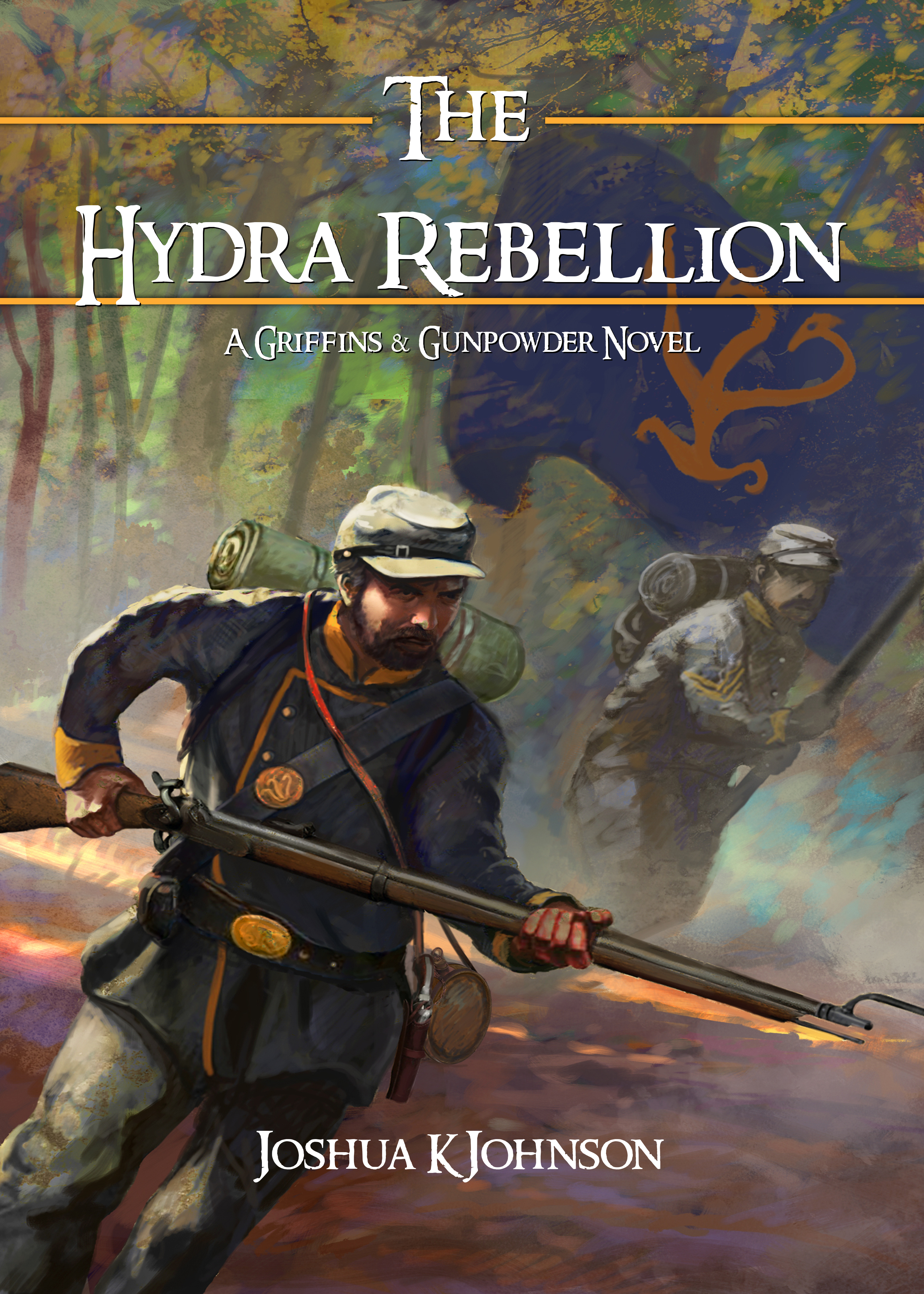

 Gunpowder Fantasy