Blog Archives
That Time of Year…
…when you don’t really get anything productive done.
This year, I’ll be working part-time at Best Buy (Black Friday was absolutely crazy) and working full-time at UPS for the Christmas Season.
Unfortunately, my writing is going to suffer and I’ll probably be posting very little.
However, I did manage to finish Battle for Broken Plains and I’m getting ready to send it to a couple of Beta Readers. It clocked in at just over 27,000 words, about twice as long as I originally expected.
My plan is to put Battle up for free across all of the major distributors and advertise it as much as possible to garner readers.
I’m going to try to get more work done on The Hydra Offensive, which is currently sitting at a sliver under 44,000, with the goal of having it completed and published before June. While 2 books a year isn’t the pace I’d like to keep, the rigors of life are such that it’s going to have to suffice.
Creating a Culture
When I decided to add Orcs to the world of Zaria, I decided immediately that they would be different from the stereotypical “hulk smash!” Orcs that are so common throughout most of the Fantasy genre.
I had already developed the concept of a group of city-states that had once been a republic. I knew that these city-states, or at least some of them, would be places of high culture that were also home to mercenary legions.
So when it came time to develop my Orcs, I decided that they would be the core to these city-states. But that wasn’t enough.
I decided to add a couple of wrinkles to the Orcs and so I created the colonies of Thayer and Galten across the Vast Sea, nestled in the mountains near the nation of Ansgar. But now I had another problem: these colonies would have been separated from their homeland for so long that they would have culture all their own.
Right now, I’m working on Battle for Broken Plains, the story of how Raedan Clyve came to be the Baron of Broken Plains, and as I write, I find myself creating the culture for different parts of my world that haven’t been explored as fully elsewhere.
The challenge is to create a culture that clearly descended from the established culture of the City States, but at the same time has its own aspects. The Orcish colonies have lived near the brutish Nordahrians for so long, they have picked up on some of their traditions.
It’s one of the things that I like so much about Fantasy: the worldbuilding of a culture that mixes mercenary instincts with fierce clan loyalty and a culture of marauding.
Now in Wider Distribution – The Cerberus Rebellion!
Good news for those of you without Kindles: The Cerberus Rebellion is now available in all e-reader formats from Smashwords. Hop on over and take a look here: https://www.smashwords.com/books/view/246079
From Smashwords, The Cerberus Rebellion will be distributed into all of the major ebook retailers.
Making Room
As I work on The Hydra Offensive, I’ve run into a problem. I originally had planned to have 6 total POV Characters, including return characters Raedan, Hadrian and Eadric from The Cerberus Rebellion and three new POVs. There would be 2 sets of 2 POVs that would follow basically the same plot lines and then 2 independent POVs with their own plot. Those 2 wouldn’t get a lot of time until mid-way through.
Well, one of the plot lines (2 POVs) has grown into a lot more than I originally planned for it to be. According to my initial outline, I should be at around chapter 12 or 13. I’m at Chapter 23. I’m finally approaching the point where the 2 independent POVs should start getting more time, but I’m beginning to worry about the end size of Hydra if I put them both in.
If I do put both of them in, I can see Hydra ballooning to over 120k words, and while that’s not as big of a concern as it may have been before, I’m more concerned with running into the George RR Martin problem of diluting the focus of the novel.
I’ve looked at it and I can reasonably push one of the subplots into the next novel, tenatively titled “The Centaur Campaign”, but if I do that, I worry that I’m going to run into the same problem until I run out of novels to push storylines to. Cutting the proposed storyline won’t either because this is a major character who features prominently in the series going forward.
Funny enough, and on a related note, I’m actually going back through my novella “Battle for Broken Plains” and adding in a new major POV. This character got some time later in the story, but I think that things will flow better, and avoid as much infodump, by adding the character in earlier in the piece and slowly introducing the content.
Have you ever had to push a character into the next book to make sure your novel doesn’t get fat?
Marketing From the Niche
When I was in the middle of world-building the Griffins & Gunpowder Universe, I ran into a dilemma. I had a solid idea of what I wanted to do with this universe: I wanted it to be an epic fantasy but I wanted to bring gunpowder technology into it. The problem was that I couldn’t for the life of me find very much in the way of previous examples of how this was best accomplished.
So I was debating dragging the whole universe back to the standard-fare medieval world, or taking it into a full-on Steampunk world. After some internal debate, some twitter chats with other authors and some googling, I decided to go ahead and make the world that I wanted to make in the first place.
Now that I’ve released The Cerberus Rebellion and plowed into the Gunpowder Fantasy subgenre full speed, I find that it’s rather difficult to find marketing venues for it. The Griffins & Gunpowder Universe is between two worlds; not quite Traditional Epic Fantasy but definitely not Steampunk.
So I’ve tried to reach out to the few other authors that write in the sub-genre and build a network of Gunpowder Fantasy authors.
A.S. Warwick’s Commonwealth Chronicles (his website is here) would definitely fall into my definition of Gunpowder Fantasy, though he doesn’t go quite as far down the gunpowder/steam technology path as I do. Where Griffins & Gunpowder is set in the mid-19th century with muskets being phased out, rifles common and the beginning emergence of cartridge-based revolvers, the Commonwealth Chronicles is set in a late 18th-century to early 19th-century setting. Muskets and smoothbore cannon are the dominant firearm in Mr Warwick’s world; rifles are rare, slow to reload and cumbersome.
Another author whose world falls into Gunpowder Fantasy, though again on the earlier stages of the technological tree, is William King. His Terrarch Chronicles make heavy use of muskets and, from what I’ve read so far, very much include heavy magic use.
The last author, and the one that I’ve had the most interaction and cross-promotion with, is Harry Vossen from A Way With Worlds, a world-building how-to. I had the chance to read some of his yet-to-be-released novel, Under a Burning Sky, and I was impressed. His work is definitely the furthest from my own; through the first few chapters (I haven’t had a chance to read through the full novel) Under a Burning Sky uses very little reference to gunpowder. In fact, Harry’s world is probably the closest of these selections to traditional Epic Fantasy. To the point I reached, muskets weren’t used and the only gunpowder weapons seemed to be cannons loaded aboard ships.
The point of this post is to say that no matter how small you think your subgenre is, with the expansive nature of the internet and the booming eBook market, there is likely to be someone else writing something similar enough to your own works that you can draw parallels between the two worlds and help each other through cross-promotion.
The Cerberus Rebellion – Last Free Run
Starting today, The Cerberus Rebellion will be starting it’s last KDP Select Free Run. It will be free until 10/10 (Wednesday) so if you’ve been looking to pick it up, now is your last chance. Download it here or click the cover below!
For those of you who don’t have a Kindle, I’ll be putting Cerberus up to the other major eBook vendors!
 The Cerebrus Rebellion
One hundred years of peace and prosperity. War changes everything.
On the world of Zaria, Elves, magic and mythical beasts coexist beside rifles and railroads. The futures of two nations hang in the balance as rebels and revolutionaries trade gunfire with loyalists and tyrants.
Eadric Garrard was raised to believe that as the rightful King of Ansgar, his loyal nobles and fearful subjects answered to his every whim, no matter the cost or consequence. His decision to send his troops thousands of miles away will test that fear, and loyalty.
Raedan Clyve was ordinary until an Elven ritual involving a griffin’s heart turned him into something more. Twenty years later, he still struggles with the magics that rage through his body. His mentor holds him back from his full potential and he faces pressure to find a suitable wife and father an heir.
Hadrian Clyve has picked up where his father left off and works to expand his family’s influence amongst the Ansgari nobility. His aggressive negotiation of alliances and shrewd choice of marriage agreements has earned him respect, and resentment. When his King calls his troops to arms, Hadrian has other things in mind.
After a century of scheming and decades of preparation, Magnus Jarmann is ready to bring his family’s plans to fruition by launching a war of independence that will free his people and return his country to its rightful place among the nations of Zaria. The King’s call to arms creates an opportunity that Magnus cannot afford to miss.
In a war, little is held back; in a revolution, nothing is safe.
A Novel of approximately 90,000 words.
Sneak Peek: Battle at Broken Plains – Prologue
Below is the Prologue for Battle at Broken Plains, a novella that tells the story of Raedan Clyve’s rise to power as the Baron of Broken Plains. It’s currently going into Alpha Editing phase so I’ll be printing it out and taking the red pen to it. Hopefully, this should be out by the end of the year.
-Prologue
Auberon Strait rung his hands and paced beside the bed of Lord Rendall Garand. He had cast every spell that he had learned in his short time studying as a life-giver, but the Baron of Broken Plains was sick beyond his skills. Auberon doubted that any but the most skilled life-giver would have failed to bring the Baron back from the brink of death, but he still wondered if he could have done more.
The room was one of the largest in Garand Castle. The ceiling was twenty feet above the floor, tapestries adorned every wall and large windows let in sunlight during most of the day. Lanterns burned bright in their sconces along the wall and a fire blazed in the hearth.
Auberon ran a hand through long red hair and rubbed the back of his right ear. He had inherited many of his father’s features, the red hair, the sapphire eyes and the elongated ears. Auberon had also followed his father’s choice of occupation and had served as the advisor to House Garand for nearly two hundred years. He was sad to see the once proud dynasty coming to a close.
Lord Rendall Garand had married the sister of a Frantan Clan-Lord, but she had been barren. As the only son of an only son, Rendall was the last living Garand and would leave his lands to another family when he passed. Auberon had been ready for the death of his lord: he had been studying the family trees of the local nobility for more than a year.
Lord Hadrian Clyve would be the heir to the Broken Plains Barony under the laws of Ansgar; he and Rendall shared a great-grandmother. Auberon had wondered, briefly, whether Lord Clyve would be allowed to take control of another barony. Aside from the North Griffin Cliffs, Hadrian stood to inherit the South Griffin Cliffs when his father-by-law passed. There were some in the Ansgari nobility that believed Hadrian was not qualified to hold two baronies, much less three.
Auberon believed that the Clyves were the best option for the continued existence of the Broken Plains Barony. The Broken Plains and North Griffin Cliffs Baronies shared a border with each other and with the territory of Clan-Lord Jared Terrell, the brother of the late-Lady Garand.
Clan-Lord Jared Terrell had already claimed his right as the rightful heir to the Barony, despite his lack of claim in any Ansgari court. In Franta, the eldest brother of any woman was automatically considered the heir to the territories which her husband claimed if no viable heirs were born of the marriage. He had visited the Barony three times in the last year and had made his position very clear. Auberon believed that was one of the reasons that Rendall’s condition had deteriorated more quickly in the last year than it had in the five years prior.
Rendall coughed violently and Auberbon frowned.
“Steward!” Auberon shouted. A small man scurried through the thick wooden door. He was a small man, he had gone bald years before and his green eyes were downcast. He shuffled across the stone floor with short, stuttered steps that betrayed the limp he worked so hard to disguise.
“Prepare a horse,” Auberon ordered, “and supplies to get me to the Overlook.”
“At once, milord.” The steward bowed and hurried out of the room.
Auberon knew that leaving the barony so soon after the passing of its noble would be risky, there would be no one of authority to command the guards or try to negotiate with Jared Terrell, but it was his responsibility to tell Lord Clyve of Rendall’s passing and inform the Baron of North Griffin Cliffs that he was the rightful heir to the territory.
Rendall began coughing so violently that he hunched over in his bed, then was suddenly silent.
“My Lord?” Auberon moved to the bedside. He pressed his palm to his noble’s chest. Rendall Garand did not breath.
I plan on putting Battle at Broken Plains up for Free, so keep an eye out for links!
Putting the Gunpowder in “Gunpowder Fantasy”
The Gunpowder in “Gunpowder Fantasy”
After you’ve decided on which aspects of traditional Epic Fantasy you intend to include in your world, you can look to the things that you will be able to do differently.
Some “Gunpowder Fantasy” (A.S. Warwicks’ Commonwealth Chronicles, William King’s Terrarch Chronicles) lean more toward the early Gunpowder Era and maintain more of a Muskets and Magic feel.
Prevalence
Who has access to Gunpowder in your world? Is it a common technology that nearly everyone uses, or is it in the hands of the few? Is there widespread production of gunpowder or is it a rare, precious commodity?
Creating a world where everyone has gunpowder leaves your armies on a mostly even playing field. They all have access to similar weapons and have to make their advantages out of intangibles: strategy, tactics, etc.
A setting where gunpowder is used only by the few can setup a massive disadvantage for one side or the other. You can put power into the hands of the producers by making gunpowder a rare commodity; make the recipe a secret known only to a few.
Weapons
The first, and probably the most obvious, element that is opened up when your choose to write Gunpowder Fantasy is the use of gunpowder weapons. From the arbuequs to the rifled musket, from simple smoothbore cannon to rifled barrels and siege mortars, the use of gunpowder weapons can have an effect that varies greatly on the path of your story.
Artillery
The first form of gunpowder weapons to consider is the artillery. Where in the “Gunpowder Era” you decide to set your world will determine your overall tech level, but even within those bounds there are many different types of artillery.
Smoothbore cannons, mortars, howitzers and rifled cannon are all options for your world to employ in artillery. Each of these types will have advantages and disadvantages that will have an effect on your world if you choose to add them to your armies.
Howitzers, for example, are typically shorter barreled, used to lob rounds at a steeper angle while not suffering from the short ranged mortars. In the Griffins & Gunpowder universe, I decided to forego the use of howitzers and my armies have to fight their battles accordingly. Earthworks become more important as it is more difficult to get rounds to fall directly behind them. This makes trench warfare more effective.
Small Arms
Artillery can have an effect on the way wars are fought in your world; small arms will have an effect
Choosing an earlier type of man-portable gunpowder weapon (say, the arbuequs) will leave your world more open to traditional medieval warfare (swords, bows and arrows, etc). This would be a more ideal setting for a warrior-type main character, someone who is going to be in and among the fight. Battles will be long and bloody and involve a great deal of hand-to-hand fighting.
Later weapons, such as rifled muskets, will create a major shift in the strategies of your world and how battles are fought. Gone will be the days of constant close fighting, and in will be the battles of tight formations of soldiers standing shoulder to shoulder and firing volleys, skirmishers with long rifles moving forward ahead of the main body to disrupt the enemy scouts and skirmishers, and the compact carbines, for quick moving cavalry attacks. Commanders will rely on strategy and manuevering, rather than brute force and superior numbers.
Some of the accessories to small arms that you can consider bringing into your world are bayonets and looking glasses (telescopes). Both of these will create a twist in the way that firearms are used in your world. Bayonets make hand-to-hand combat more brutal and makes your infantry more powerful at repelling cavalry charges.
Looking glasses create the possibility of sharpshooters and skirmishers. Attached to a rifled musket, looking glasses make your shooters more accurate at longer ranges. Skirmishers can be used as assassins, ordered to target the officers and commanders of the enemy force before they engage the main body of troops. Or they can be used as scouts and screening elements, the eyes and ears of the army who harass the skirmishers on the other side of the field and prevent them from learning the strength and dispositions of the armies.
Pistols/Revolvers
The last element of small arms to consider are the pistols and/or revolvers that will be used in your world. Like the other types of weapons, pistols and revolvers will be determined by the level of technology that you set for your world, but in the gunpowder era, revolvers and pistols were typically ahead of the curve.
There are two things to take into consideration when you’re planning out this part of your arsenal: do you want to use revolvers? If so, do you have these revolvers muzzle-load or use cartridges? Cartridge revolvers will increase the speed that the revolvers fire and reload at.
Pistols and revolvers were typically more expensive, which means that they were typically used only by officers and nobility. Whether you continue this into your worlds is up to you, but even an entire army armed with revolvers will have little effect on the flow of a battle until they are nearly too close to worry about reloading the weapons.
In the next article, we’ll talk about some of the other aspects of Gunpowder Era technology that can be incorporated into your world, including steam power and telegraphy.
Of Magic and Mythical Creatures
For the second post of “What is Gunpowder Fantasy” I’ll be discussing the use of magic and mythical creatures in the sub-genre. (The bulk of this post taken from my guest post at A Way With Worlds)
Magic
Magic has been in fantasy from the very beginning of modern Fantasy. C.S. Lewis and JRR Tolkein both made extensive use of magic in their worlds.
So it would be natural that Magic would be another element of traditional fantasy that can be used to connect your Gunpowder Fantasy to the bulk of Epic Fantasy.
The exact nature of your magic system is up to you, but there are a few major points that you need to address when you’re building a magic system.
First, and with everything in your world, you have to make sure that you are consistent. If magic works one way at the beginning of the book, it needs to work the same way in the middle and at the end.
The Prevalence of Magic is usually one of the first aspects that I approach when I am building magic into one of my worlds. How common are magic users within your world? Are there mages and witches and wizards in every town and village? Or are they rare? Or is magic thought to be extinct except to a very select few?
One aspect of your world that will be affected by the Prevalence of Magic within your world, and one that not everyone considers when they are building their world, is the Impact on the technology of your world. If magic is extremely common, then technology will develop differently and perhaps more slowly than in a world where magic is rare or nearly extinct. Why develop improved weapons when everyone can cast a fireball with their minds?
Something that will affect and be affected by the Prevalence of Magic, is the Source: how does one go about becoming a magic user. Is it a natural gift? (Here you can increase or decrease the prevalence of magic by deciding on how common the gift is.) Is it a knowledge based system that only requires study and how common are the books that teach magic? Is Magic only gained through some ritual and how difficult are those rituals to perform? Lastly, can magic only be gained through some accident or event? This particular source would be best paired with magic that is very rare as accidents can’t be controlled.
With the Prevalence and Source of Magic decided, another aspect that must be approached is the Energy of Magic. What gives the user the ability to cast their spells? Do your magic users have to carry talismans of power? Do they need to draw their energy from themselves or from the people around them? This can be another factor in the Prevalence of Magic. A system that is learned by anyone is all well and good, but if it relies on certain talismans that are very rare, then very few will be able to learn.
Limits of Magic is an aspect of your system that is very important. Magic systems without limits can become boring quickly if there is nothing to keep magic users in check. Even stories where the magic users seem to have unlimited power should have some weakness, otherwise the story can’t progress.
Limits can come in many different forms, several of which are similar to the Source of Magic and can tie into Prevalence. Your magic system can be limited by Knowledge: mages must learn spells and those scrolls or tomes can be rare. You can limit your magic through the Energy of Magic: if the mage has to draw from their own energy, at some point they should become exhausted and unable to cast new spells. You can use other magic-users as a Limit: anyone who grows too powerful or too reckless can be put down by other magic users.
An aspect of your magic system that is more open to personal interpretation is Divisions of Magic. This aspect isn’t integral to the system, but can add flavor to it. You can have your divisions “hard”: magic users can only draw from a single school or aspect of magic. Soft divisions allow magic users to draw on any aspect that they have access to (this ties into your Source and Energy categories).
The magic system that I use in my Griffins & Gunpowder universe is rather limited. I would rate it as “Rare” Prevalence: only a certain, random portion of Elves are born with The Gift. This covers both the Prevalence, Source and Impact: technology in this universe has advanced to rifles and early steam power. Magic users can draw from energy within themselves, and can “store” this energy beforehand to have ample supply, and some can draw on the energies and emotions of those around them.
Magic users in the Griffins & Gunpowder universe are limited by both energy and knowledge. They will quickly burn through even the largest “stockpile” of energy and must study spells to perfect them. This is further complicated by the fact that magic users have a Major and Minor aspect that are randomly drawn from one of the four divisions: Shadow, Light, Life and Death. Books teaching each of these aspects are rare and the magic users have to learn prerequisite spells before they can learn more advanced selections.
So, when planning a Magic system remember to maintain consistency and consider each aspect of your system and how it impacts the other aspects and your story in general.
Mythical Creatures
I was considering folding this discussion into the “Settings” part of my little series here, but I decided to give Mythical Creatures their own quick discussion.
Dragons are probably the best known mythical creatures used in Fantasy. They’re iconic. But there are many other types of mythical creatures that can be used to tie your Gunpowder Fantasy to mainstream Fantasy.
Going through the Pantheon.org Beastiary is a great way to find mythical creatures that could fit into your world.
You can use these mythical creatures as they were originally believed to be or you can turn the stereotypes on their heads and use your mythical creatures in a completely different way. I would suggest keeping the more popular mythical creatures at least vaguely similar to their more popular myths, but it’s your world.
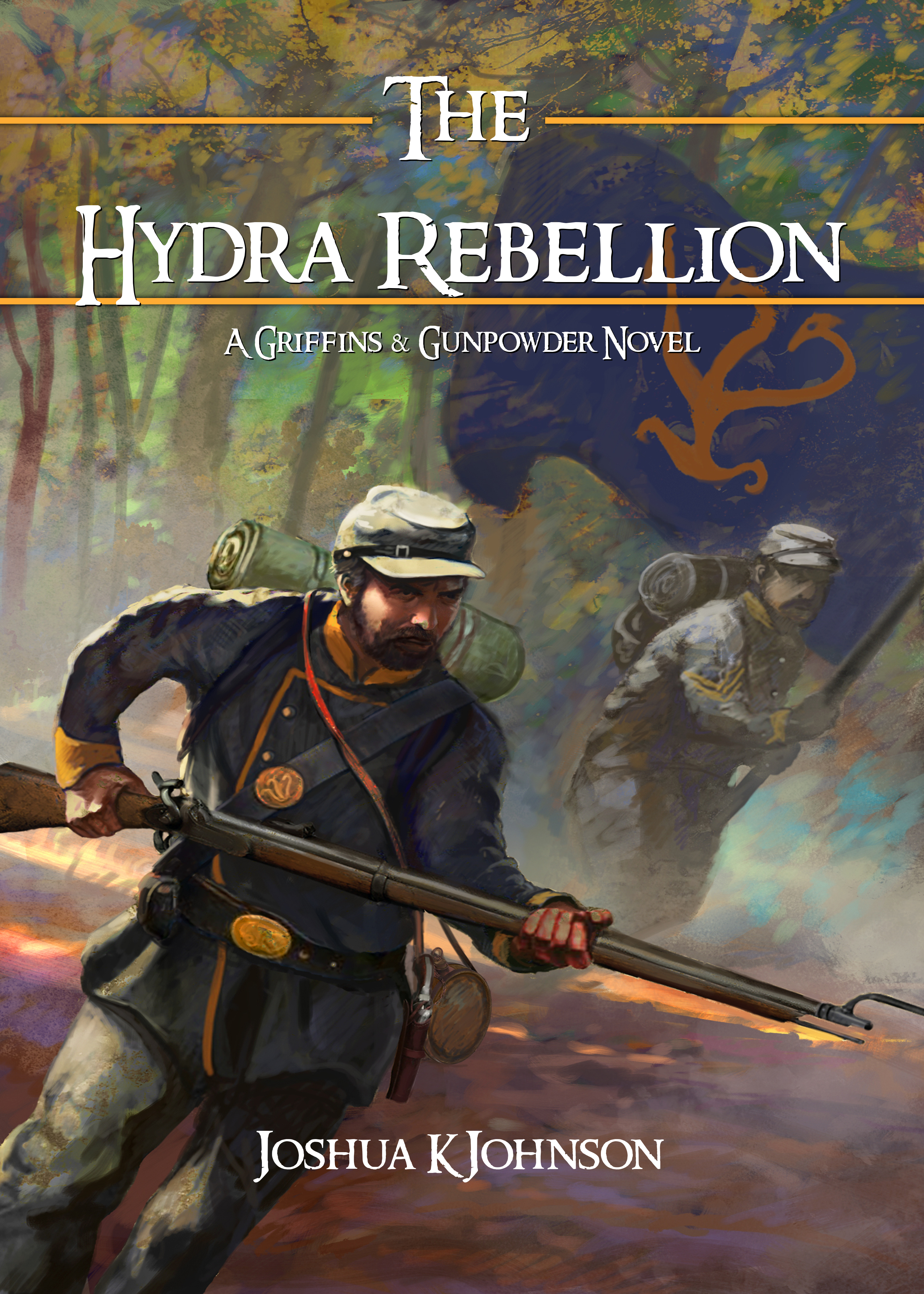

 Gunpowder Fantasy