Blog Archives
How Things Are Going
I’ve been a busy guy!
I’ve put Cerberus through another round of edits, and then I discovered the Elevenlabs app on my phone. I’ve listened through all of Cerberus and made some clean up edits, removing duplicate words too close together and things of that nature.
I’ve also tried out the Elevenlabs web program, where it uses AI to narrate text. I’ve crafted the first scene of Cerberus and am considering where to go from here.
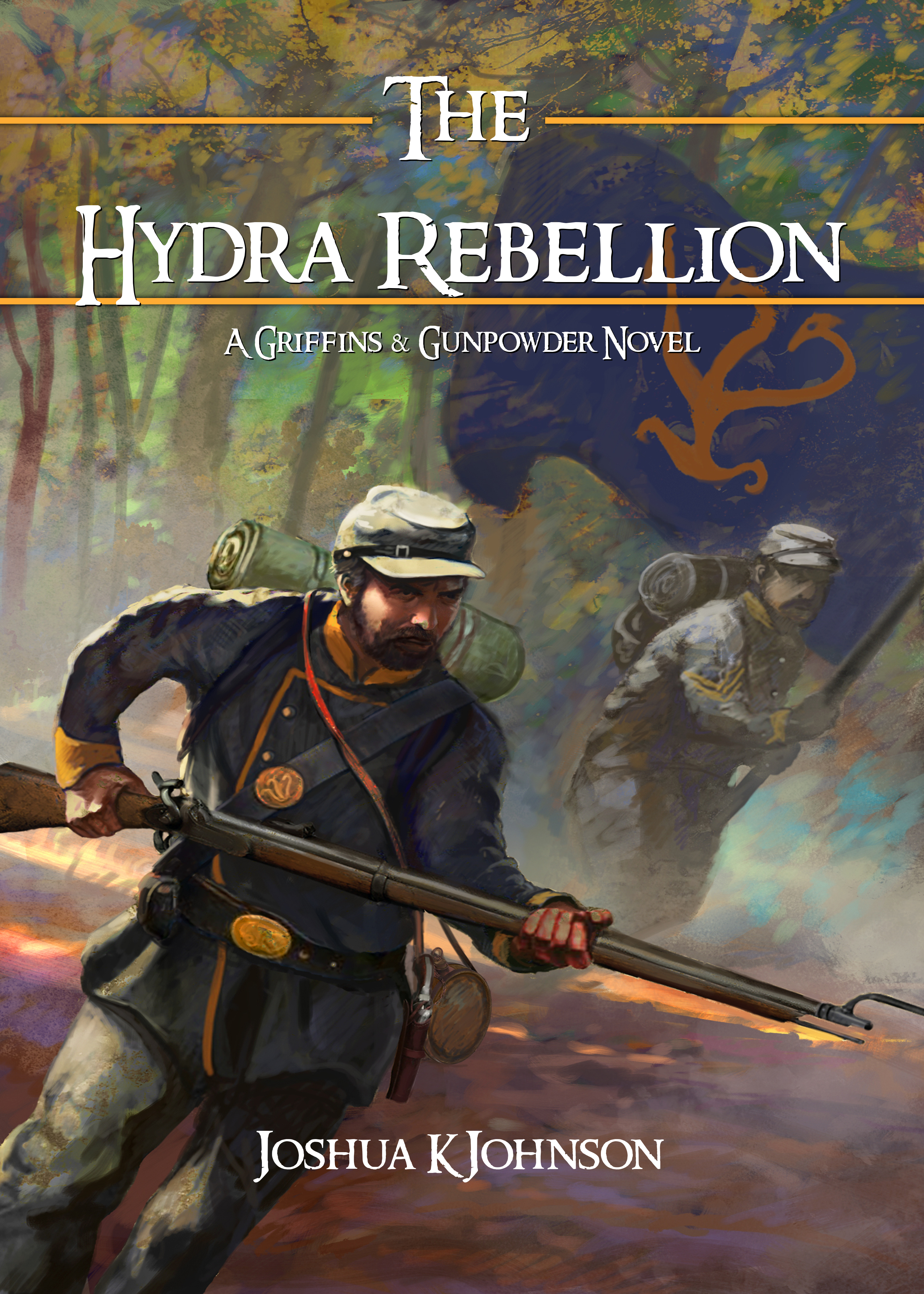
Hydra is ready for the first pass of edits, which I intend to start tomorrow. I’ve already got edit notes put together for changes to make along the way as this is more of a high-level editing pass.
I’ve fully outlined The Centaur Offensive, and then went back through and overhauled it to the point where I’m very happy with it. I’m excited to start the writing for this!
Overall, a productive July!
The Plan!
Realizing that I have a metric ton of words to write just to get through the mainline ideas bouncing around in my head (around 2.7 million words just in the novels themselves, plus all of the planning and summary work) I decided to make an actual plan for how I’m going to get through the Ansgari Civil War series.
I’ve also started a plan for the Novel Web, but that is going to take some tweaking.
I’ve started a local wiki to help consistency check the works and make sure I don’t go off the rails.
I need to finish the rewrite of Hydra, which will be another 70,000 words, the 5 more books in the series at a projected 100k each. Plus 3 companion novels that will dovetail into the series finale: 60k each for another 180k. Three books in the Andivar series for another 300k total.
And then the big work begins. 28 novels in the Web, starting with a standalone and then diverging into the 6 strands of Interconnected but independent series. The plan, currently, is to write all of those novels from a singular POV, which will cut the work down to approximately 60k words each for a grand total of about 1.7 million words.
It’s daunting for me to write the numbers down and realize how much I’ve got to do. I am bolstered by the fact that I was able to do about 60k words for NanoWrimo a couple of years ago. Even if I worked at about 50% of that pace, that’s only about 5 years of actual writing. Plus the planning, summary and editing phases.
Hey, all done by my 50th birthday (9 1/2 years) would be a reasonable goal 🤣🤣

So, I threw out 80,000 Words…
I was reading through Loyalty Betrayed (aka Series 2;Book 1) and I came to a realization.
I had originally conceived of the story as a retelling of Othello, with significant changes to the cast and the overall storyline (its more a political betrayal for the bride of the MC than it is a physical betrayal). But I ended up feeling that I had leaned too heavily on the source materials.
The storyline didn’t flow the way I wanted it to, I shoehorned in certain scenes just because they were in the play.
So, I took the first 2 chapters and threw the rest out. I needed to add a bunch of content anyways because I had removed a secondary plot of about 40,000 words (that’s going to either be a companion novella or Book 2 in the series, not sure which yet).
I spent the last day writing a new chapter-by-chapter summary and just wrapped that up at a little over 7,000 words. Now to get to the actual rewriting process.

The Magic/Tech Formula
In the world of Gunpowder Fantasy, there is a fine line to walk between magic and technology.
Magic will necessarily impact how technology develops within your world. If magic is extremely common, useful and easy to use, why would people develop technology like steam power and rifles? On the other hand, a lack of magic will facilitate the advancement of these technologies much like it did in our world.
To that end, I’ve developed a rudimentary formula that can help you determine what your starting point should be so you get the most out of your world.
On the magic side of things, I have 4 scores: Commonality, Functionality, Difficulty, and Cost. All rated on a scale of 1-10.
Magic
Commonality, How Common is Magic?
For Commonality, you want to decide how common you want magic to be in your world. Can everyone use magic, either through natural talent or the ability to learn? Then you’re going to give your magic system a Ten for commonality. Is magic, inversely, very rare, either because it requires a rare natural talent or years of study? Then your magic system gets a One.
Functionality, How Useful is Magic?
For this score, you want to decide what areas of your world magic can affect. Can your magic users do anything they want with magic? Fireballs, teleportation, communication, etc. If you want magic to touch every part of your world, you’re going to give it a Ten. On the other hand, if you want magic to be very narrowly useful, then a One score is appropriate.
Difficulty, How Difficult is Magic?
If you want your magic to be difficult to control or learn, then give it a Ten. If you want your mages and wizards to be able to weave magic and cast spells without much challenge, then score a One.
Cost, What Does Magic Cost?
No cost magic that can be cast all day and without fear of repercussion? A Ten. MAgic that costs life energy and exhausts the mage, or even blood magic that requires a sacrifice to achieve? A One
Total Score
Once you have determined these scores, you add them together for a maximum total score of 40 for a common, easy to use, very useful and low cost magic system. A very rare, marginally useful magic system that has a high degree of difficulty and cost will rate a minimum of 4.
Magic Modifier
Once your have your Total Magic Score, you divide it by 8. Why 8? Because that’s the sweet spot that I found for impact on technology.
Technology
Writing a Gunpowder Fantasy means that you have embraced that technology and society will be advancing beyond the stasis of Medieval Europe that many fantasies embrace, at least in some areas and at some rate.
Base Technology, What is your Starting Point?
For the most part, I would recommend giving your world a base technology score of Ten so that the modifications work the best.
Progression, How Fast/Far Will Tech Go?
This score is rated from 0-2, in .5 increments and measures how fast and how far technology will move over the course of your story. There are two determining factors in this score: how long will you be in this world, and how fast do you want technology to develop. The first part is fairly simple: do you want to write a Stand-Alone Novel? Then technology is not likely to advance very far. A series, especially focused on conflict, will typically advance beyond your starting point (See my Post Here on the Arms Race).
Inversely, if you’re writing a series you’ll want to see a progression of technology rather than rapidly leaping from one technology level to the next, so this will lower the progression score.
Final Tech Score
Now that we have the parts of our formula in place, we can put it to work as such:
(Base Tech)-(Progression)-((Commonality+Functionality+Difficulty+Cost)/8)=Final Tech Score
For what this score means, I have a 4 point scale for technology that impacts Weapons, Travel/Communication, and Society.
One – Worlds with a final technology score of 1 will be at the very basic end of the Gunpowder Fantasy Spectrum. Weapons will be in the mid to late Match Lock era with primitive artillery. Travel will be entirely beast of burden driven, with no steam-powered trains or ships. Communication will be messenger and courier based. Society will likely still be in the feudal stages or even despotism and there will be no collective labor groups.
Real World Example – Early Colonial Period of the United States; Europe from the 15th to early 18th centuries.
Three – As your technology score rises, so does the access to firearms and artillery. A world with a 3 rating will have smoothbore, flintlock rifles, moderately early smoothbore artillery and mortars. Travel will still be animal driven, though a high 4 score might be in the early stages of railroad development and communication will still rely on couriers or messengers. Absolutely monarchies will be replacing the feudal system but collective labor will still be a thing of the future.
Real World Example – Revolutionary War Period of the United States; Seven Years War in Mid-to-Late 18th Century
Five – A middle of the road score will see percussion muskets in use and the early stages of railroad travel coming to life in your world. You might also see the first stages of telegraph systems at a high 6 rating. Early representative and democratic governments start to replace the ancient kingdoms and empires as labor begins to collect under the banner of guilds.
Real World Example – The Mexican-American War of the 19th Century; Crimean War in Europe
Seven – Rifling has entered the world of firearms, allowing for more accuracy at longer ranges and a shift in combat tactics. Artillery will have started to implement rifling as well. Railroads, and even the early stages of steam powered ships, will be common in a world with a rating of Seven . Telegraphy will be common, allowing for rapid communication across entire nations with minimal lag. Democracy will still be a developing form of governments but labor will be strongly collectivized in Guilds and even the earliest formation of Unions could be seen.
Real World Example – American Civil War
Nine – The most advanced bracket of technology in a Gunpowder Fantasy, a score of 9 will see the use of repeating rifles and revolvers. Railroads will be extremely common and well-developed as will the use of telegraphy to communicate complex orders and news. Democracy will be the government de jour and Unions will have replaced Guilds as the most common form of Collected Labor.
Real World Example – American Imperialist Period of the late 19th Century, Industrial Revolution.
Summary
Beyond these technologies, you start to lean into Steampunk territory. In the end, no matter where this formula leads you, it’s your world to do with as your please. I hope that this proves helpful, however, in pointing you in the right direction for where your technology should start and where it can lead based on what your goals are and how far you want to take the Gunpowder Fantasy Genre.
In the Interim…
The writing on Loyalty Betrayed is complete, but the book is far from ready for queries, so I’m taking my own advice and letting it sit on the shelf for a little while before I pick it up for rewrites and editing.
In the Interim, however, my mind keeps spinning. I’ve decided to take this time to try something slightly different.
Another New Idea
While getting ready for work this morning I had an idea for a new series set within the Griffins and Gunpowder universe, though about 5,000+ years in the past. Here’s the bit that wandered through my head and demanded attention:
“We are the last of our kind, hunted to the edge of extinction by those who would have this power all to themselves. They call us abominations against magic. They burn our brothers and sisters at the stake, and entice our neighbors to surrender us to our fates. But we are not alone. The power of dragons flows within our veins and the Broods stand with us.”
That makes 6 (I think) different series that are set within this world. That’s a lot of writing, I guess I should get to it!
All of the Pieces
The Centaur Incursion is 10k words deep and The Hydra Offensive is nearly through Round 1 of Paper Edits. I don’t have classes this summer, so I should be able to tear through my workload on both of those.
There, I started with an update!
Constantly Evolving
Something that I’ve learned as I plot and write the stories of The Ansgari Rebellion, is that stories are more a living creation than a static work.
While the core of the series has remained essentially the same, many of the details have morphed and changed.
Characters have walked into the story from out of nowhere and insinuated themselves as cornerstones of the books in which they reside and those that follow.
Plot points have moved, from the beginning of the series, to the middle, and now to the end.
Even though I am a meticulous plotter, typically drawing up a book’s outline by chapter well before I start writing it, I’ve learned the benefits of being flexible with my story. My style has developed into a sort of hybrid: still heavily plotter, but with just enough pantser to allow for more story to develop and grow on its own.
In production news, The Centaur Incursion is underway! I’ve got 1,000 words written and more ready to come out as soon as I get a chance to sit down. Also, The Hydra Offensive is more than halfway through the first round of paper edits. I plan on putting it through a second round, in which I’ll break the chapters down by POV rather than by chapter order.
I’ll be looking for beta readers soon, so if you’re interested let me know!
Evolution of Cities
Before the Industrial Revolution, populations were dispersed across nations. The number of people that could live in a given area was determined by the amount of food that could be produced close enough to the town/village and brought to market before it spoiled. Whether this was through agriculture, fishing, hunting, or livestock, food production was the number one determining factor of a population.
The Industrial Evolution changed that. As I discussed in my post on Agriculture in Gunpowder Fantasy, the reach of farms and farmers, and the ability to mechanize the production process, increased exponentially. This change left many farmhands without work. So they moved to the city, where new textile mills and factories were sprouting up to feed the Industrial machine.
Cities began to grow as more and more people poured into them from the countryside. But immigration wasn’t the only factor in the growth of cities. With better medicine and better food, more people were surviving for longer and having more children. Cities suddenly found themselves growing as much as 50% every 10 years.
On our world, this increase in population was strictly Human. But in a fantasy world, the immigrants and their children could be of a different species. Imagine a world where industrialization has suddenly rendered the majority of a dwarven city unemployed. Unable to feed their families, these dwarves move to the nearby human city, looking for work in the factories, foundries, and mills. They resent the fact that they have been replaced by machines and left to do the most menial tasks.
Imagine the tension between the two species, and any other populations that might live within the city.
This tension could lead to the formation of gangs as young, unemployed citizens roam the streets looking for fun, or to exact their own brand of justice on the world. The seeds of revolution could be planted, driving the nation toward civil war.
Overcrowding would also become a concern, as more and more people poured into the city, or were born into it. A city that had been built to house 10,000, within a generation it finds itself home to 30,000, many of them poor or uneducated. Sanitation would suffer and disease would spread. The city would tear itself apart as the rich hid within their houses and the pour died in the streets.
Worldbuilding: The Ansgari Knighthood
One aspect of traditional fantasy that I’ve incorporated into the Griffins & Gunpowder universe is the concept of a Knighthood as a part of the Military Apparatus.
For the nation of Ansgar, the Knighthood is part of the Chain Of Command but is not a requirement to become an officer.
While a knighthood comes with a Commission, a Commission does not come with a knighthood.
There are three ranks of the Ansgari Knighthood: Knight-Lieutenant, Knight-Captain, and Knight-Commander.
Each level of the Knighthood is considered the equivalent to a half rank. So, a Knight-Lieutenant B half a rank above a commissioned Lieutenant but also half of a rank below a commissioned Captain. The same is true of Knight-Captains between Captains and Majors, and Knight-Commanders above Majors but below Colonels.
Another unique aspect of the Ansgari Knighthood is that only the King can grant a Knighthood. Because of the distance involved, and the King’s increasing apathy toward them, the Western Nobles of Ansgar have a Muck lower occurrence Of knights within their ranks.
Depending on what parts of Traditional Fantasy you include in your world, consider different ways to integrate the title of knight.

 Gunpowder Fantasy